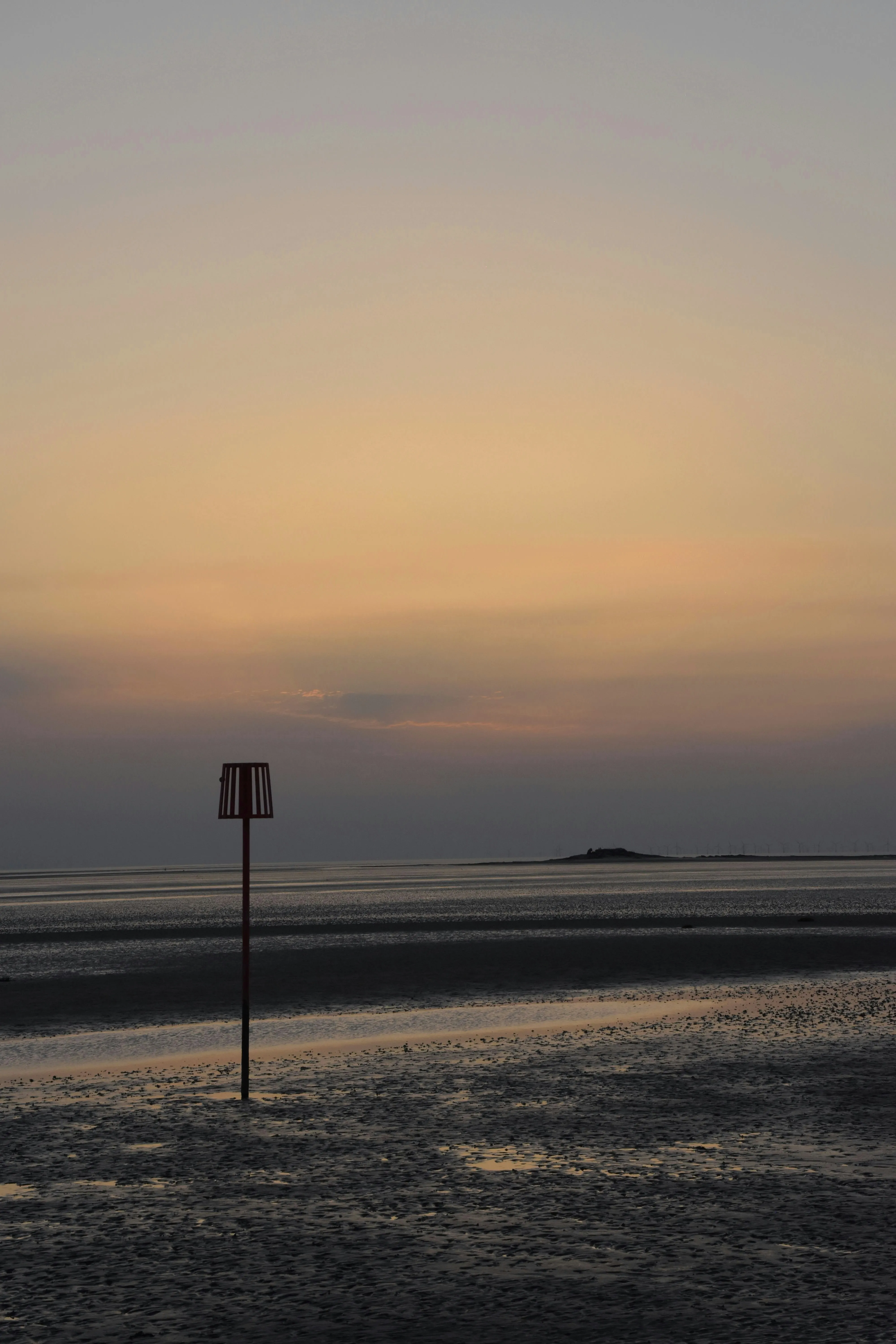
A sunset on Hilbre Island is one of those experiences that stays with you. The sun drops towards the Welsh hills across the Dee Estuary, the wet sand glows gold and pink, and the whole sky lights up. It’s the kind of thing you see on postcards, except you’re actually standing in it, with the sound of the wind and the water and nothing else.
The challenge is that you can’t just turn up at any time. You need the tides and the sunset to align, and you need to make sure you can get back to West Kirby safely. But when it all comes together, it’s unforgettable. We’ve done this walk dozens of times over the years, and the sunsets from the west side of Hilbre are consistently some of the most beautiful we’ve seen anywhere on the Wirral coast.
How to Time It
You need two things to line up: a safe crossing window and sunset. Here’s how to work it out:
- Check the crossing window. Use HilbreTides to find the safe crossing times. You need the window to extend past sunset by at least 45 minutes — enough time to walk back across the sand in fading light. If the window closes before sunset, this isn’t the day.
- Check the sunset time. Search for “sunset time West Kirby” for today’s date. Golden hour starts roughly an hour before sunset. Aim to be on the island by then.
- Plan your return. You’ll be walking back in fading light. Make sure you have a torch or head torch, a fully charged phone, and know the route well. The walk is more disorientating in the dark, so stick to the established path and don’t rush.
The alignment doesn’t happen every day. Some weeks, the safe crossing window falls entirely in the morning or early afternoon, and sunset is hours after the tide has come back in. Other weeks, you get a perfect late-afternoon window that extends right through golden hour. Keep an eye on the 7-day tide forecast and be ready to go when conditions align.
A Word on Safety
Sunset walks require more planning than a standard daytime visit. Walking across the sand in failing light is significantly harder and more risky. The landmarks you use for navigation — the marker posts, the island outlines, the mainland shoreline — become much less visible in the dusk, and it’s surprisingly easy to drift off the route.
Some ground rules:
- Only do this if you already know the route from daytime visits — a sunset walk should never be your first crossing
- Bring a good torch or head torch, not just your phone flashlight
- Tell someone your plan and expected return time
- Do not attempt this in poor weather, fog, or strong winds
- The safe crossing window must still have at least 45 minutes remaining after sunset
- Walk with at least one other person if possible
Read our safety guide and our advice on whether Hilbre is safe before planning an evening visit. If in any doubt about conditions, postpone. There’ll be another sunset.
Best Seasons for Sunset Walks
Spring and autumn offer the best combination of reasonable sunset times (not too early, not too late) and good light quality. Autumn in particular produces vivid sunsets — the air tends to be clearer after the summer haze, and the lower sun angle creates richer colours. We’ve had some of our best evenings on Hilbre in late September and October, when the sky turns deep orange and pink and the reflections on the wet sand seem to go on forever.
Summer means long evenings and more opportunities for sunset timing to align with tides. But midsummer sunsets happen very late — after 9pm in June — so you’ll be out there a long time and walking back in near darkness. The light quality can also be hazier in summer, though on a clear evening it’s still stunning.
Winter sunsets can be the most spectacular of all — the low angle and crisp air produce intense colours — but the early darkness and cold make the return walk more challenging. Sunset can be as early as 4pm in December, which means you need a mid-morning crossing window and very tight timing. Only experienced walkers who know the route well should consider winter sunset visits. That said, a winter sunset from Hilbre on a clear, still day is genuinely world-class.
Best Spots to Watch
The west side of Hilbre Island gives you an unobstructed view across the Dee Estuary towards Wales. On a clear evening, the sun sets behind the Welsh hills — the Clwydian Range and sometimes the mountains of Snowdonia — and the reflections on the wet sand and water are incredible. The estuary acts like a giant mirror when the tide is out, doubling the sky.
Find a comfortable spot on the rocks on the western shore, sit down, and just watch. The show usually lasts a good 20 to 30 minutes from golden hour through to the final glow after the sun dips below the hills. Don’t leave immediately after the sun disappears — the best colours often come in the 10 minutes after sunset, when the sky turns from gold to deep pink to purple.
The old lifeboat slipway on the west side is a good spot — the flat rock gives you a comfortable seat, and the view is completely unobstructed. Higher up on the island’s ridge, you get a wider panorama but lose some of the closeness to the water. Either way, give yourself time to settle in — the light changes constantly during golden hour, and the best moments often come when you least expect them.
If the wind is strong, the sheltered east side of the island can work too. You won’t see the sun itself from there, but the reflected light on the water and the colours in the sky overhead can be just as beautiful. We’ve had some of our best photos from the east shore, shooting the afterglow reflected in the channels between Hilbre and Middle Eye.
Photography Tips
If you’re a photographer, sunset on Hilbre is as good as it gets on the Wirral coast. A few tips:
- Bring a tripod — the light drops fast during golden hour, and you’ll want longer exposures for the reflections on the wet sand
- Shoot towards the water for the best reflections, not just towards the sun
- Include foreground interest — the sandstone rocks, pools of water, and marker posts all make great silhouettes
- Stay for the afterglow — the most dramatic colours often come after the sun has set
- Wide angle works well for the big skies, but a 50mm or 85mm lens can isolate beautiful details in the reflections
Remember you’ll need to pack up and walk back in fading light, so keep track of time and don’t get so absorbed in shooting that you miss your crossing window. A head torch that leaves your hands free is essential.
What to Bring
A sunset walk needs a few things beyond the standard packing list. A head torch is essential — not just your phone flashlight, which drains battery and doesn’t leave your hands free. Extra warm layers too, because the temperature drops sharply once the sun goes down, and you’ll be standing still watching the sky rather than walking. A flask of tea or coffee is a luxury that’s worth the weight.
If you’re bringing a camera, a tripod makes a huge difference in low light. Even a small travel tripod will let you shoot at slower shutter speeds for those smooth water reflections. And don’t forget spare batteries — cold evening air drains them faster than you’d expect.
Find the Right Day
The key to a sunset walk is making sure your safe crossing window extends well past sunset. Check today’s crossing times and the 7-day tide forecast to find the right day. When the tides align with a clear evening, go for it — you won’t regret it. And bring your warm layers — even on a mild day, the temperature drops fast once the sun goes down on an exposed island in the Dee Estuary.
Written by the HilbreTides team. We walk to Hilbre regularly throughout the year and update our guides based on what we see on the ground. Last updated April 2026.