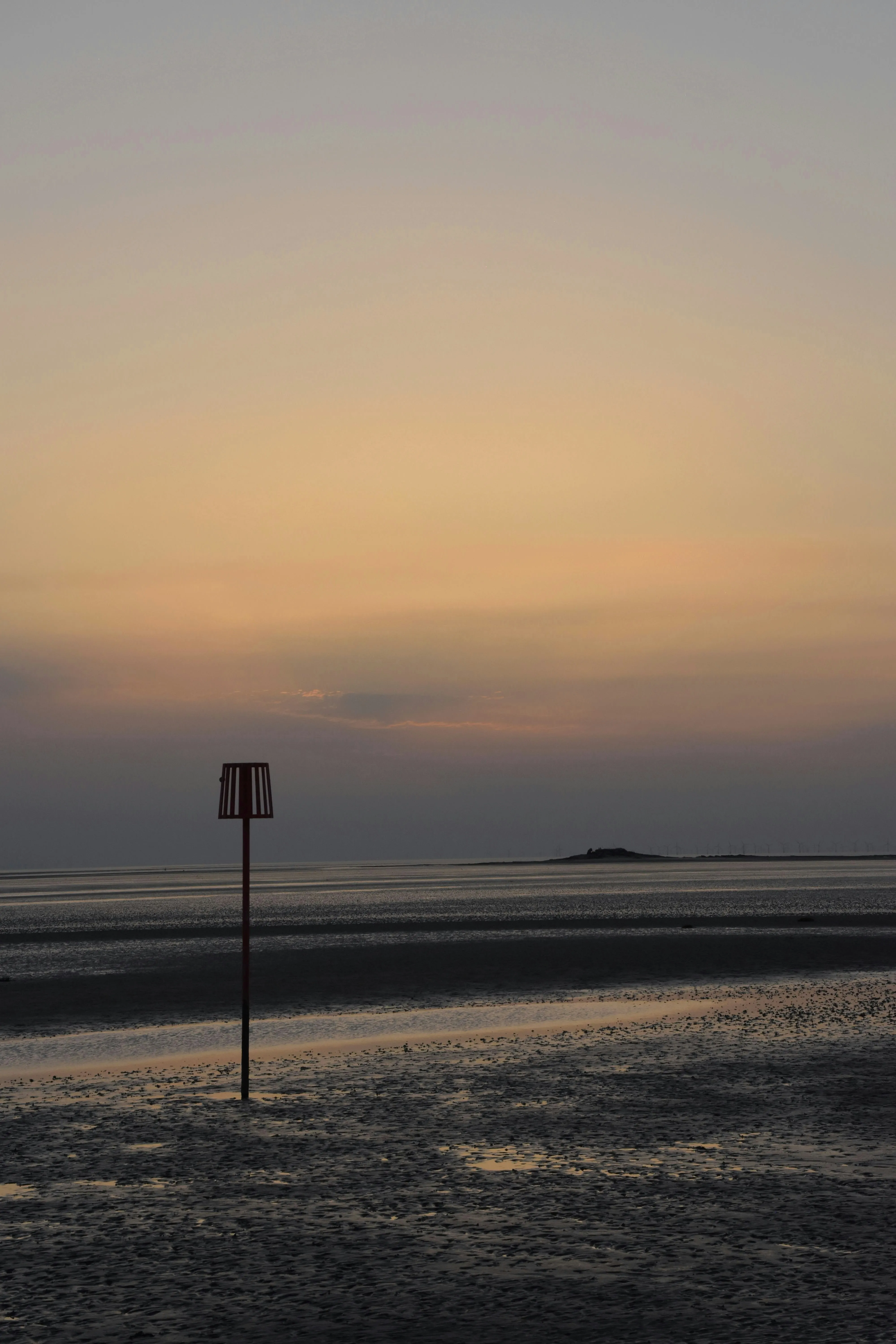
Most people think of Hilbre Island as a summer destination. Fair enough: the walk is easier in warm weather, the days are longer, and it’s more comfortable out there on the Wirral coast. But if you only visit in summer, you’re missing what many regulars consider the best version of the place.
In winter, Hilbre is transformed. The skies are bigger, the light is lower and more dramatic, and you’ll likely have the island entirely to yourself. It takes a bit more preparation, but the payoff is something you won’t forget.
Thousands of Wading Birds
Winter is when the Dee Estuary really comes alive with birdlife. The estuary is one of the most important wintering grounds for wading birds in the UK — the RSPB lists it as internationally significant — and Hilbre sits right in the middle of it.
Huge flocks of knot, dunlin, oystercatcher, redshank, and curlew feed on the mudflats at low tide. As the water rises, the birds are pushed off the mud and onto the rocky outcrops of the three islands, where they roost in packed groups. Watching thousands of knot wheeling in formation over the water — twisting and turning in perfect synchronisation, the flock shifting from silver to dark as they bank — is one of the great wildlife spectacles in the north-west of England.
The best time to see the wader roost is around high tide on a big spring tide, when the water comes high enough to flood all the mudflats and force the birds onto the islands. Our birdwatching guide has more detail on what to look for each month, but broadly speaking, November through February is peak season. We’ve had mornings where the rocks around Little Eye were so densely packed with oystercatchers that you could barely see the stone underneath.
Peregrine falcons hunt over the estuary in winter too, and seeing one stoop into a flock of dunlin at full speed is something you don’t forget in a hurry. Short-eared owls, hen harriers, and merlins are all recorded on or around Hilbre during the winter months.
Grey Seals in Winter
The seals are present all year, but winter is when you’re most likely to see large numbers hauled out on the rocks. After the pupping season (September to November), the adults spend more time resting and can often be seen basking even on cold, overcast days. The colony is less disturbed in winter too — fewer visitors means the seals are more relaxed and less likely to slip into the water when you approach the viewing area.
We’ve counted 30 or more on the north rocks on a good December morning. They tend to haul out in larger groups in winter, sprawled across the flat sandstone in that classic banana pose, grunting and snorting at each other. Bring binoculars — you’ll get a much better view without needing to get close.
The Light and the Solitude
Low winter sun creates long shadows and golden tones across the sand. The quality of light on the Dee Estuary in winter is genuinely special — photographers love it, but you don’t need a camera to appreciate it. On a clear day, the views across the estuary to the Welsh hills are sharp and vivid in a way that summer haze rarely allows.
And winter sunsets over the Dee Estuary are genuinely world-class. The sun sets earlier, which means you can often catch the golden hour without needing to stay out late, and the low angle produces intense oranges and pinks that light up the entire western sky.
Then there’s the solitude. In summer, you’ll share Hilbre with other visitors — sometimes quite a few on a warm weekend. In winter, you’ll quite possibly have the entire island to yourself. There’s something powerful about standing on a windswept island in the Dee Estuary with nobody else around, just the seals and the birds and the sound of the water. It’s the kind of experience that’s hard to find anywhere else on the Wirral.
The walk itself feels different in winter too. The sand is firmer and darker, there’s often frost on the rocks of Little Eye and Middle Eye, and the estuary has a rawness to it that summer smooths over. You’re more aware of the tides, the weather, the distance from the mainland. It sharpens the senses. On our last winter crossing, we had the entire two-mile route to ourselves — not a single other person between West Kirby and Hilbre. In summer, that almost never happens.
What You Need to Know
Shorter days mean tighter windows
With sunset as early as 4pm in December, your safe crossing window needs to fall within daylight hours. Some days in midwinter won’t have a usable window at all — the low tide might fall before dawn or after dark. Check HilbreTides carefully and don’t set off if you’ll be walking back in the dark.
Dress for exposure
There’s no shelter on the island. Wind chill off the Irish Sea can be fierce, and even a moderate breeze feels cutting when you’re standing still watching birds or seals. Wear warm, windproof layers, a hat, gloves, and consider a thermal flask of something hot. Waterproof boots are a must — you’ll be crossing wet sand and possibly shallow water. Our what to bring guide has the full packing list.
Weather can change fast
A bright morning can turn into a grey, blustery afternoon quickly on the Wirral coast. Check the forecast before you go and be prepared to postpone if conditions look poor. Fog is a particular hazard in winter as it can make navigation back to West Kirby difficult — the marker posts that guide you across the sand become invisible in thick fog, and it’s surprisingly easy to become disoriented on a featureless expanse of wet sand. Read our safety guide before any winter visit.
What to Bring in Winter
The standard packing list applies, but winter adds a few essentials:
- Windproof outer layer — the wind is the biggest challenge, not the cold itself. A good windproof jacket makes an enormous difference
- Warm hat and gloves — you lose a lot of heat through your head, and cold fingers make binoculars difficult to hold
- Waterproof boots — not optional in winter. The sand holds more water, and the channels between the three islands are often wetter than in summer
- A flask of something hot — tea, coffee, soup. Standing on a windswept island watching birds is wonderful, but it’s cold work
- Binoculars — essential for the bird spectacle, and useful for watching seals from a respectful distance
- A fully charged phone — batteries drain faster in cold weather. Consider a power bank
Dress in layers rather than one heavy coat — you’ll warm up on the walk out and cool down quickly once you stop on the island. The walk back to West Kirby is when you’ll appreciate having that extra layer.
The Perfect Winter Visit
The ideal winter day at Hilbre is a cold, clear morning with a safe crossing window that starts around mid-morning. You set off in crisp sunshine, walk out across the frost on the sand, watch the waders being pushed onto the rocks as the tide rises, spend an hour on the island with the seals and the birds, and walk back in the low golden light of early afternoon.
Those days don’t come along every week, but when they do, they’re magic. Keep an eye on the tide times and the weather forecast, and be ready to go when conditions align. It’s one of the best winter walks on the Wirral — and one of the quietest. If you’re not sure whether Hilbre is right for you in winter, our safety FAQ and families guide cover the most common concerns.
Written by the HilbreTides team. We walk to Hilbre regularly throughout the year and update our guides based on what we see on the ground. Last updated April 2026.