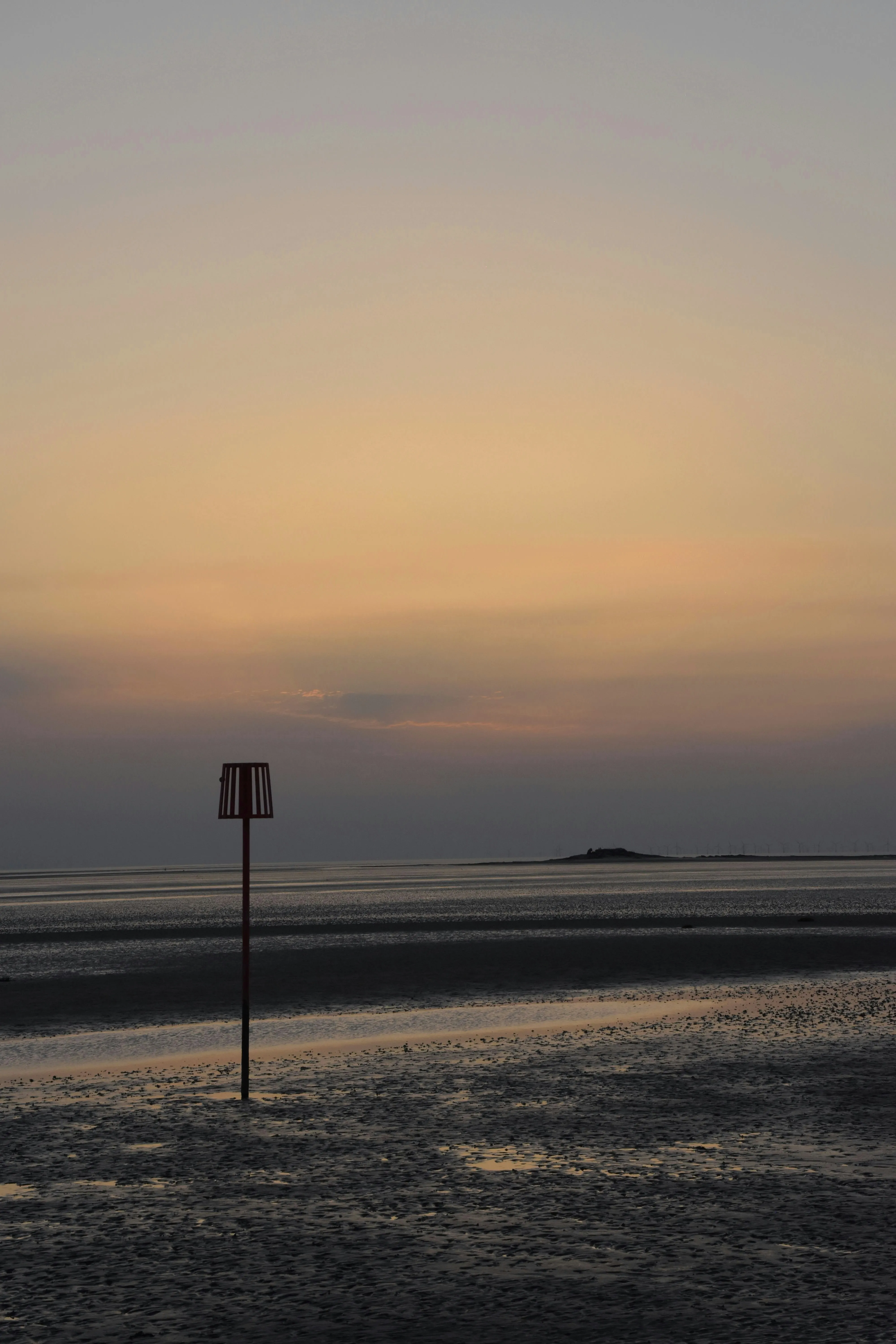
Almost everything we write about on this site comes back to one thing: the tide in the Dee Estuary. It's what opens and closes the walk to Hilbre, what catches people out on the Wirral sands, and what shaped the towns along the shore. So it's worth understanding why the Dee behaves the way it does.
One of the biggest tides in Britain
The Dee sits on a stretch of the Irish Sea coast that has an unusually large tidal range. On the biggest spring tides the difference between high and low water here is around ten metres, among the largest anywhere in the country. The estuary's broad, funnel shape makes it worse, or better, depending on your point of view: as the rising tide is squeezed into the narrowing channel, the water has nowhere to go but up and in, so it climbs fast.
That's the heart of the danger on these beaches. On flat sand, a fast vertical rise becomes a fast horizontal one, and the sea sweeps in across the flats far quicker than a person can walk. It doesn't even need to reach you directly: the gutters and channels behind you fill first and cut off the way back. If you'd like the practical version of all this, our guides to understanding Wirral tides and reading tide tables go into it.
A great port that silted away
The Dee wasn't always saltmarsh and sand. For centuries it was a major shipping route, with Chester one of the most important ports in the north-west. But the estuary slowly silted up, the navigable channel shifting and shoaling, and ship by ship the trade drained away to the deeper Mersey and the rise of Liverpool. Attempts to canalise the Welsh side of the river in the 18th century helped the channel but hastened the build-up of saltmarsh on the Wirral shore.
You can still read that history along the coast. Parkgate was a working port and then a fashionable bathing resort, until the sea quietly retreated behind a spreading marsh and left its handsome front looking out over grass instead of water. The story of the Dee is, in large part, the story of sand winning.
A landscape made for wildlife
What the silting created is, for wildlife, extraordinary. The estuary's vast intertidal sand and mudflats, its saltmarsh and its sandbanks are nationally and internationally protected, and in winter they hold well over a hundred thousand wading birds and wildfowl: knot, dunlin, oystercatcher, curlew, pintail and many more, feeding on the invertebrate-rich mud. Grey seals haul out on the offshore banks, and at places like Parkgate the highest tides flush small mammals from the marsh and bring hunting birds of prey right in to the sea wall.
It's why the islands and shoreline around Hilbre have been watched and recorded by naturalists for generations, and why so much of the coast carries conservation designations today.
Why it pays to respect it
All of which is a long way of saying: the Dee is beautiful, but it's not gentle. The same big, fast tides that make it such a rich place for birds are the ones that put walkers in difficulty year after year, right around the Wirral coast. None of that should put you off, it's one of the finest coastlines in the north-west, but it does mean the habit of checking the tide before you go is not optional here.
You can see today's crossing status for Hilbre on our home page, and tide times for spots all around the estuary and the north coast on the all Wirral tides page.
Written by the HilbreTides team. Tide predictions on this site come from the Admiralty UK Tidal API.